Wiggly Music vs Play Music Theory: two ways to draw sound
Both let a drawing become a musical loop. Compare the feel of each playground, try the same three-mark experiment, and choose where to begin.
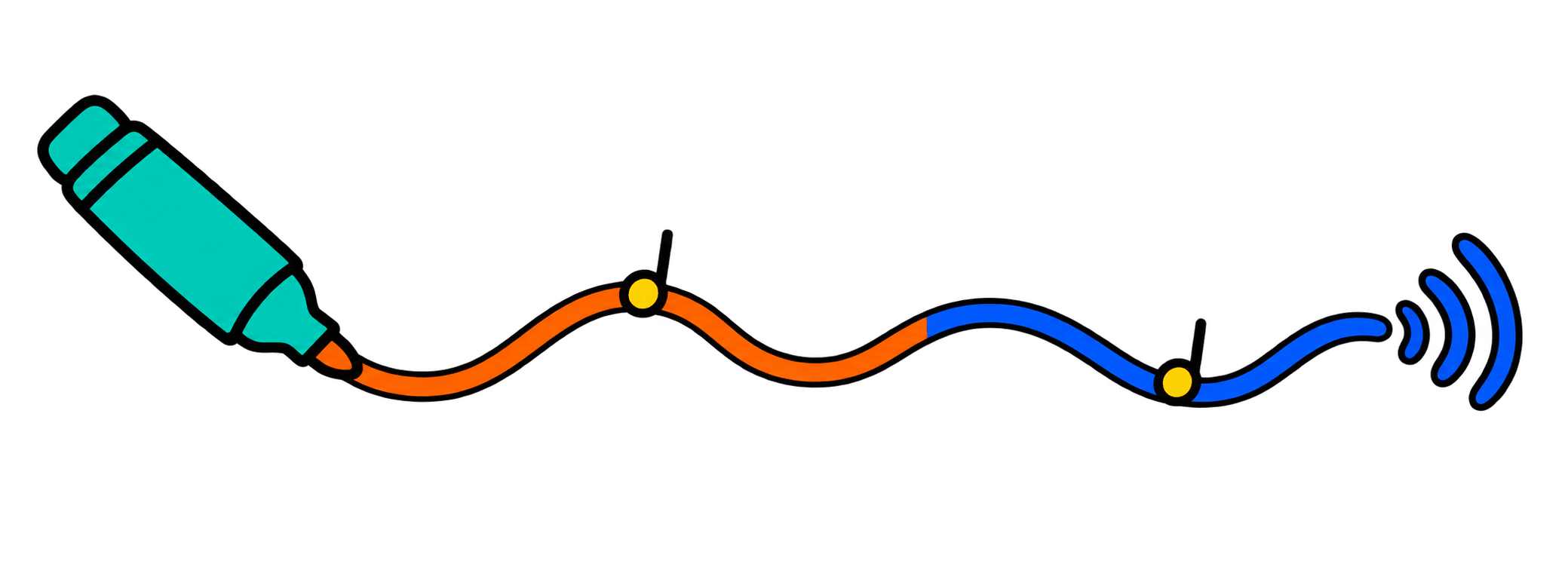
If you enjoy drawing a shape and hearing it play on playmusictheory.org, Wiggly Music will feel familiar. Both begin with a mark on a canvas and a musical response. Each offers a different entry point into drawing and sound.
The short answer: start at Play Music Theory when you want a clear, curious path from a doodle to pitch and rhythm. Start at Wiggly Music when you want that idea to wriggle into a sketchbook: make a loop, change its character, and follow wherever it goes. Neither requires you to read notation before you play.
First, the part they share
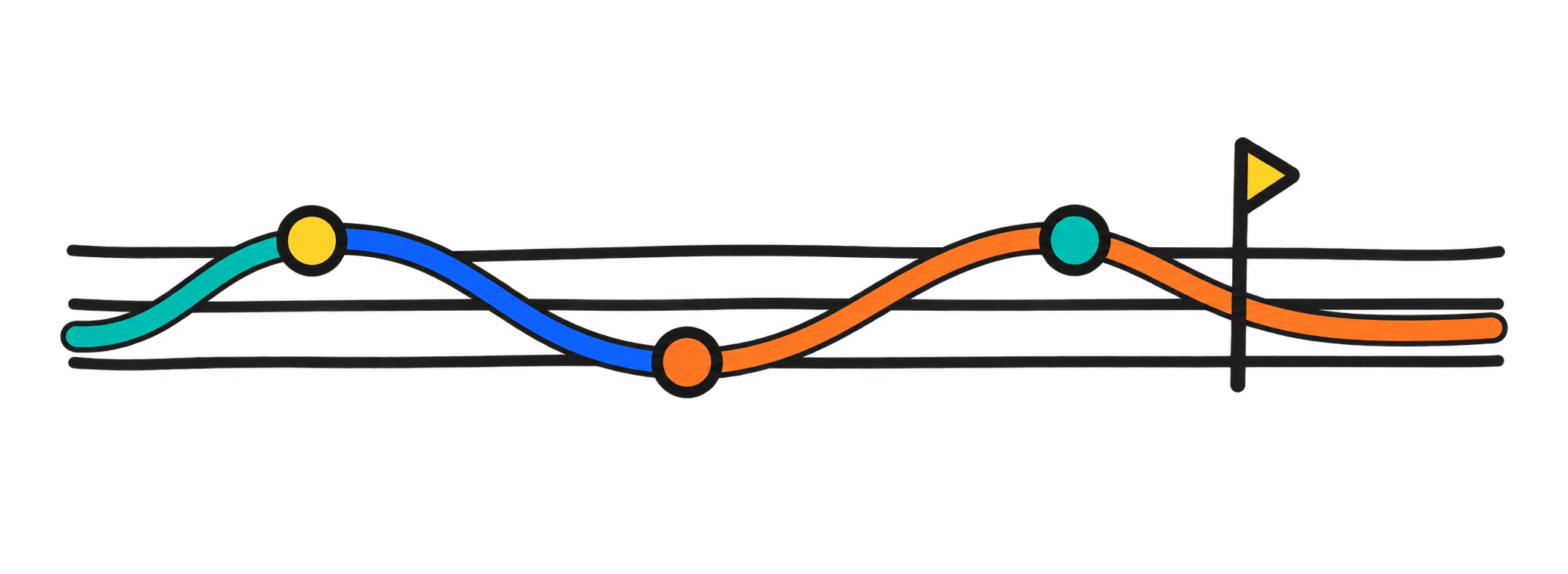
On either canvas, horizontal position is time and vertical position is pitch. A mark on the left sounds earlier; move it up and the sound rises. Add a second color or space the marks differently, and the loop changes. Both offer musical controls such as key, scale, timing, and export alongside the drawing surface. The core invitation is to draw, listen, adjust.
That overlap matters. The clearest difference is the experience around the instrument.
Where the paths feel different
Play Music Theory
Follow the question
Its guides begin with approachable prompts: what happens if a mark rises, repeats, or leaves a gap? It is a good place to turn a playful experiment into an understanding of pitch and rhythm.
Explore Play Music Theory guides →Wiggly Music
Follow the sketch
The Wiggly Music page places the drawing at the center, then invites you into different creative starts: melody, rhythm, theory, and performance. Its gallery makes other people's loops part of the journey.
Listen to the Wiggly gallery →The difference is easiest to feel after trying both. Play Music Theory asks, “What did that mark teach your ear?” Wiggly Music asks, “What strange little piece can that mark become?” You can move between those questions in a single session.
Try the same three-mark experiment
- Draw a low dot near the left edge, a higher dot in the middle, and a low dot near the right edge.
- Play the loop once. On Play Music Theory, notice the pitch rise and fall; see how changing the space between dots changes the rhythm.
- Open Wiggly Music's canvas and draw the same shape. Choose a different sound color, add a wavy line beneath it, and listen to how the little idea grows.
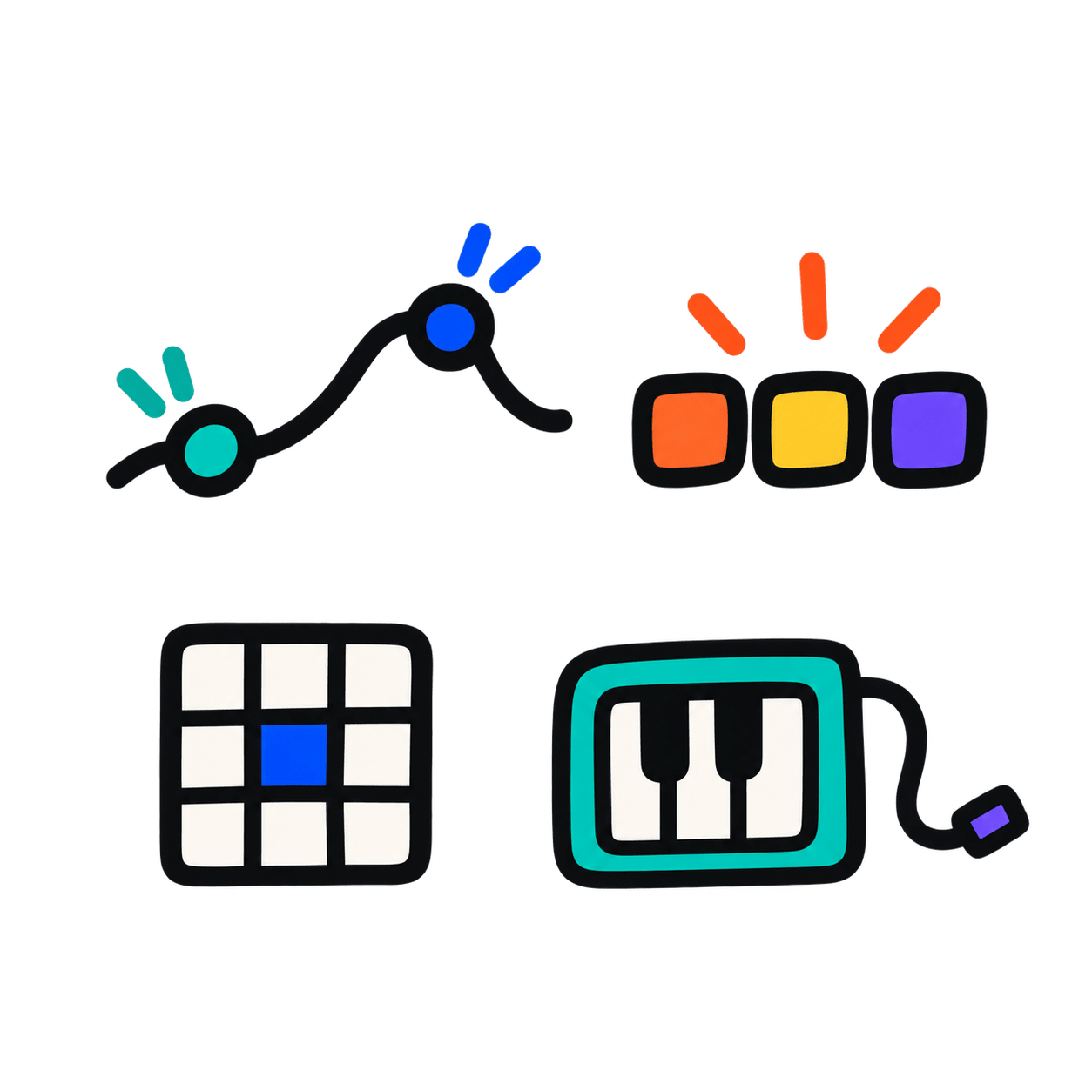
There is no score for this experiment. You are listening for a change you can explain with your ears. The helpful observation might be “the middle note arrives too soon,” or simply “the wobble sounds fun.” Both are good reasons to redraw it.
Which should you open first?
Choose Play Music Theory if you want a gentle introduction to the relationship between a shape and a musical idea. Choose Wiggly Music if you want to make a small piece right away and keep pushing its colors, sounds, and timing. Or begin with one and continue in the other.
Play Music Theory also has its own guide to these two starting points, written for readers who want to learn through a short listening exercise.
A note on provenance: the original Play Music Theory visual instrument is the work of Tala Rae Schlossberg. The sites compared here are not presented as her official work or as affiliated with her.